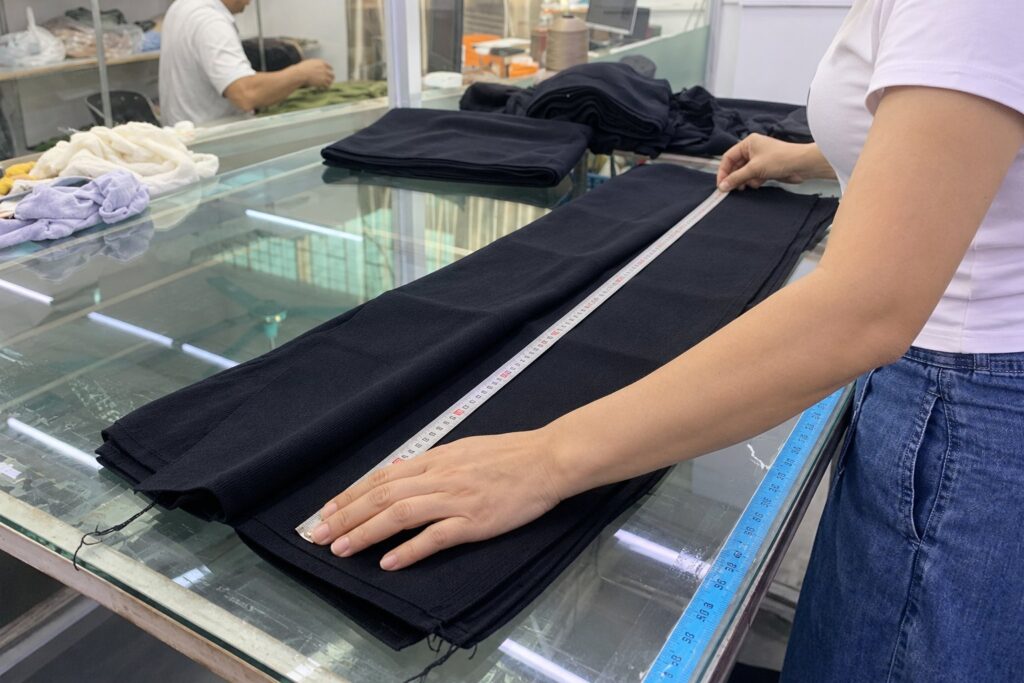
Set the condition of the garment
Agree the condition in which the sample is assessed. Record whether it is the received garment, a finished reference or a sample that has undergone an agreed treatment. Do not compare results from different conditions without saying so.
Place the garment on an appropriate flat surface and avoid stretching it to reach a preferred number. If a particular measurement requires a different method, include that instruction in the chart.
Define measurement points
Define where each measurement begins and ends. Body length, sleeve length and chest width can be interpreted differently unless the points are shown on a sketch or photograph.
State the units and whether the number is a flat width or a circumference. Keep names and methods consistent across the sample chart, comments and approval record.
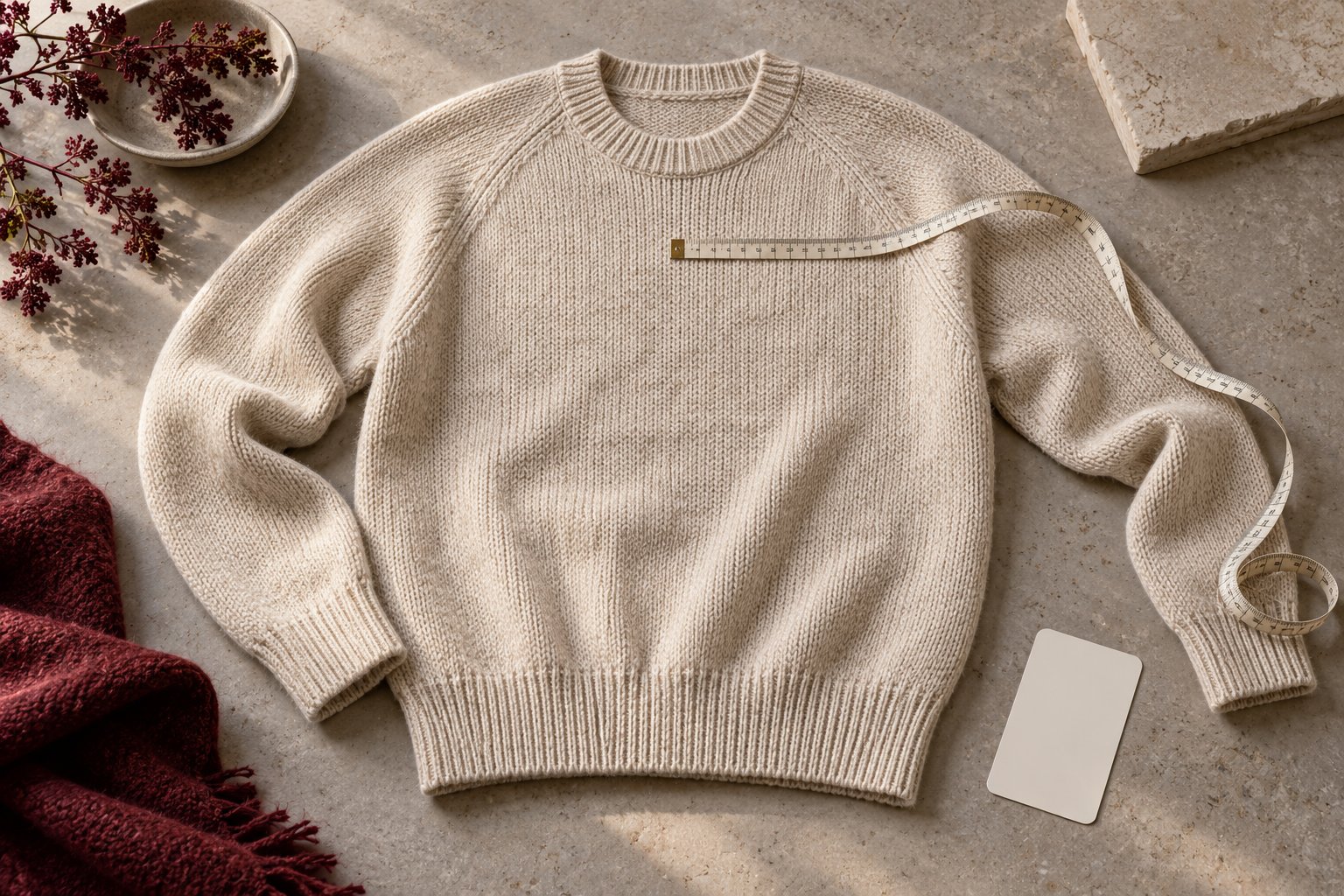
Separate flat dimensions and worn fit
A measurement chart and a fit review answer related but different questions. A garment can meet a flat dimension while still needing a discussion about the intended silhouette or how a detail sits when worn.
Record visual fit comments separately from measured results. If requesting more room or a different length, identify which measurement or construction detail should be reviewed with the maker.
Record tolerances and approval
Discuss acceptable tolerances for the actual product and measurement method. Do not copy a generic tolerance chart and assume it suits every yarn, structure or garment detail.
Keep measured results, requested changes and approved targets in separate columns. When the next sample arrives, review it against the identified current chart rather than the original brief alone.
Before you send the brief
- Sample condition and version recorded
- Units and points of measure defined
- Flat dimensions separated from fit comments
- Project-specific tolerances and approval recorded
Bring the details. Let’s review the next step.
Share your garment reference and highlight the decisions you want to discuss.
Discuss Your Project ↗WhatsApp ↗Images are illustrative. AI-generated photographs, edited process scenes and explanatory visuals are not verified records of a particular factory, customer order, approved specification or test result. Confirm product details with the development team.