
Compare surfaces and construction
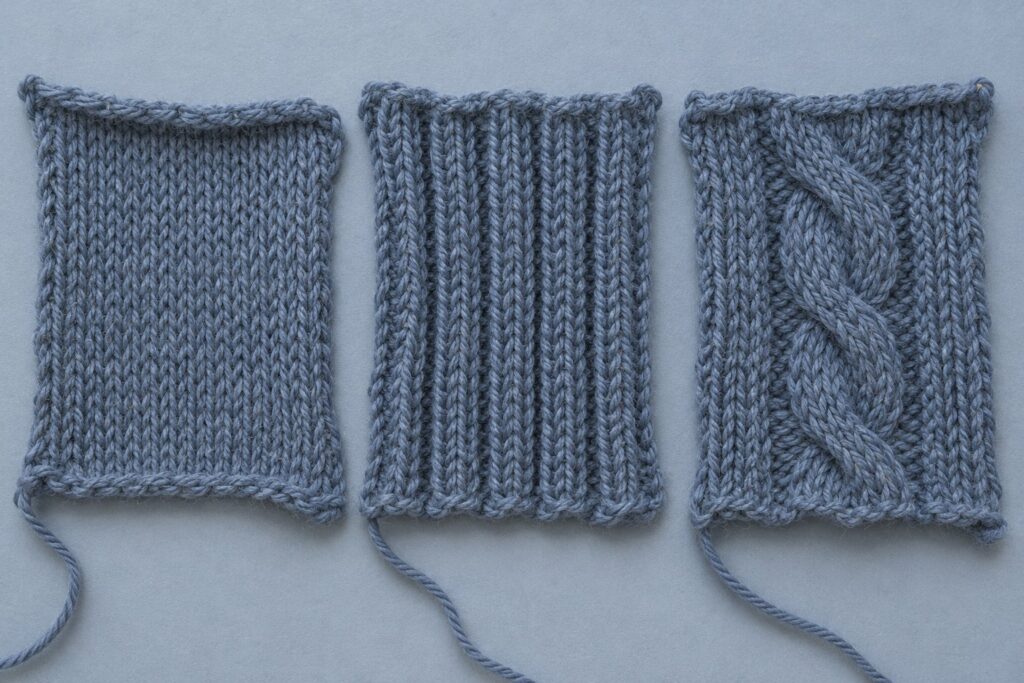
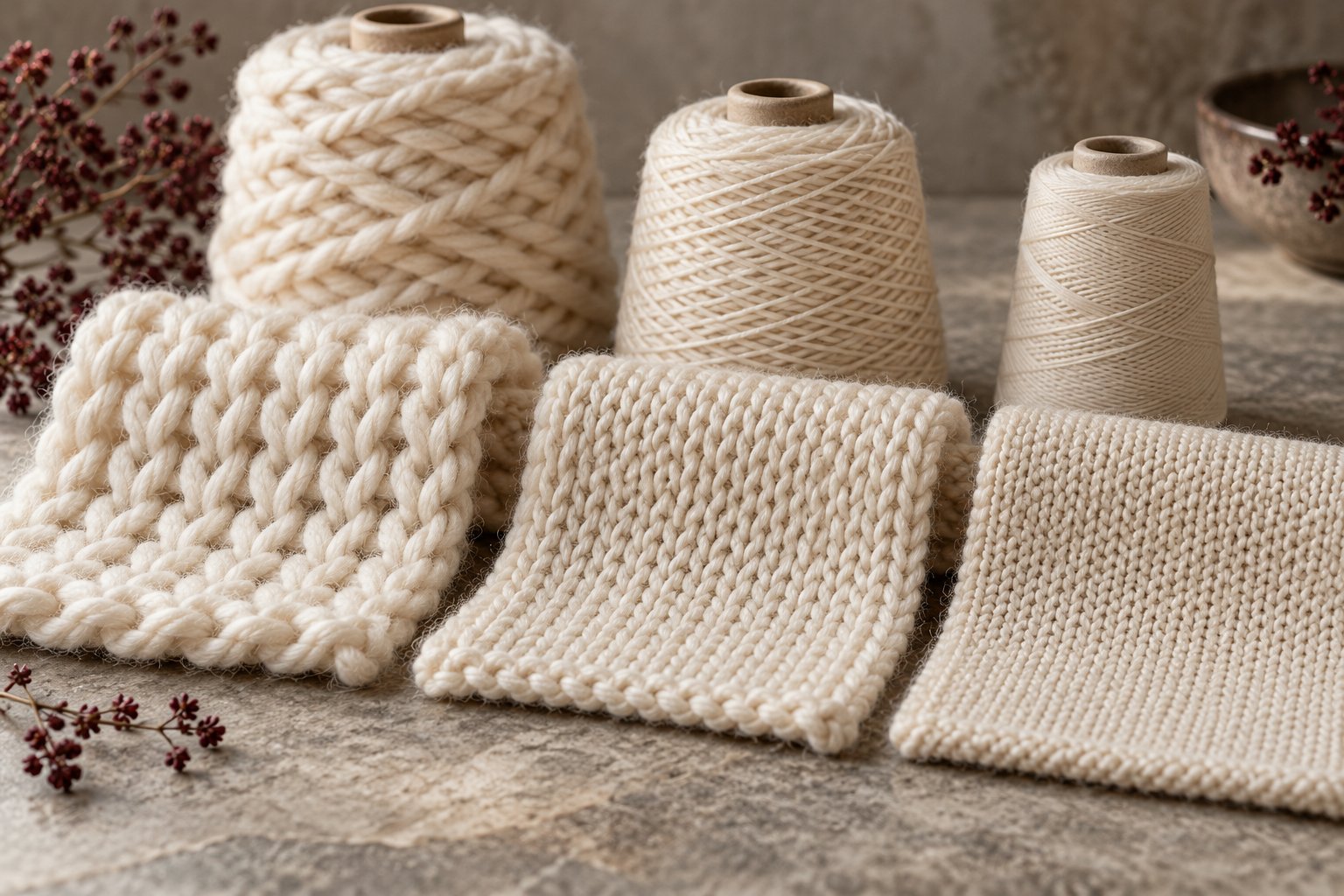
Start by explaining the surface you want. A quiet plain body, a pronounced rib or a cable arrangement communicates a different design emphasis. Use a physical reference when the depth or scale of the texture is important.
Avoid treating these names as complete instructions. Specify the intended placement and provide a drawing or reference for the actual repeat, panel arrangement or rib proportion.
Consider the garment rather than a square
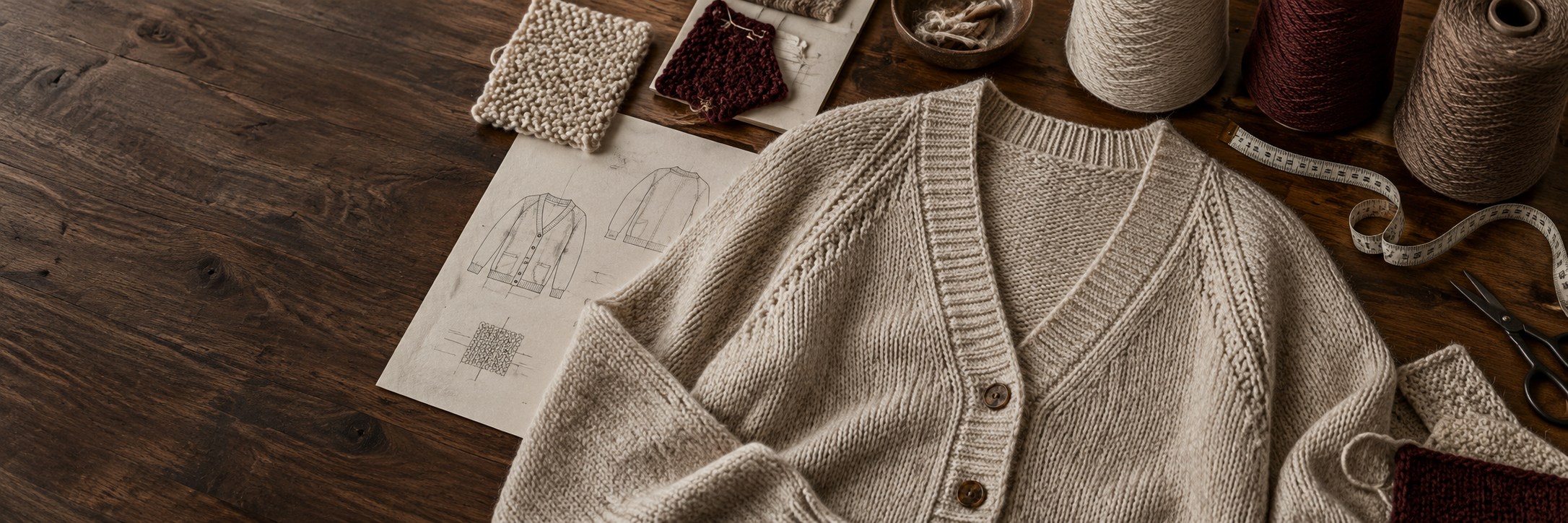
A swatch is useful for an early comparison, but it does not show every effect on a full garment. Review the proposed structure at the intended body length and width, including how it sits around seams and openings.
If several options are being compared, keep track of which yarn and finishing belong to each sample. Otherwise, a preference for one swatch may be attributed to the wrong feature.
Review edges and transitions
Look at the transition between the main body and cuffs, hem or collar. Confirm whether the texture continues, changes scale or stops at a defined point.
For a cable cardigan, for example, the relationship between the cable panel and the front opening should be considered together. Do not approve the decorative panel while leaving the placket unresolved.
Use a swatch as a decision tool
Attach each swatch to a named option and record what is being approved: appearance, handle, colour or a construction proposal. A single approval should not silently stand for all four.
Move the selected direction into a garment sample and review the result again. Record any changes so the production reference describes the agreed garment, not only an attractive development square.
Before you send the brief
- Named structure and visual reference
- Placement, scale and repeat clarified
- Edges, seams and openings reviewed
- Swatch decision confirmed in a garment sample
Bring the details. Let’s review the next step.
Share your garment reference and highlight the decisions you want to discuss.
Discuss Your Project ↗WhatsApp ↗Images are illustrative. AI-generated photographs, edited process scenes and explanatory visuals are not verified records of a particular factory, customer order, approved specification or test result. Confirm product details with the development team.