
Define the counting unit
State what one unit means. A two-piece knitted set, one cardigan and a separately packed accessory should not be counted interchangeably. Assign clear style codes and names before building the quantity table.
If a style includes an optional component, show whether that component is included in every unit or ordered separately. Keep the counting method visible in the quotation request.
Separate style and colour quantities
Give each style and colour combination its own row or clearly separated section. A total spread across many combinations is different from the same total concentrated in one combination.
At Wayhonk, the usual starting discussion is around 300 pieces per style per colour, often across around four sizes. The actual project still needs review; a collection-wide total is not automatically the same as a style-colour quantity.
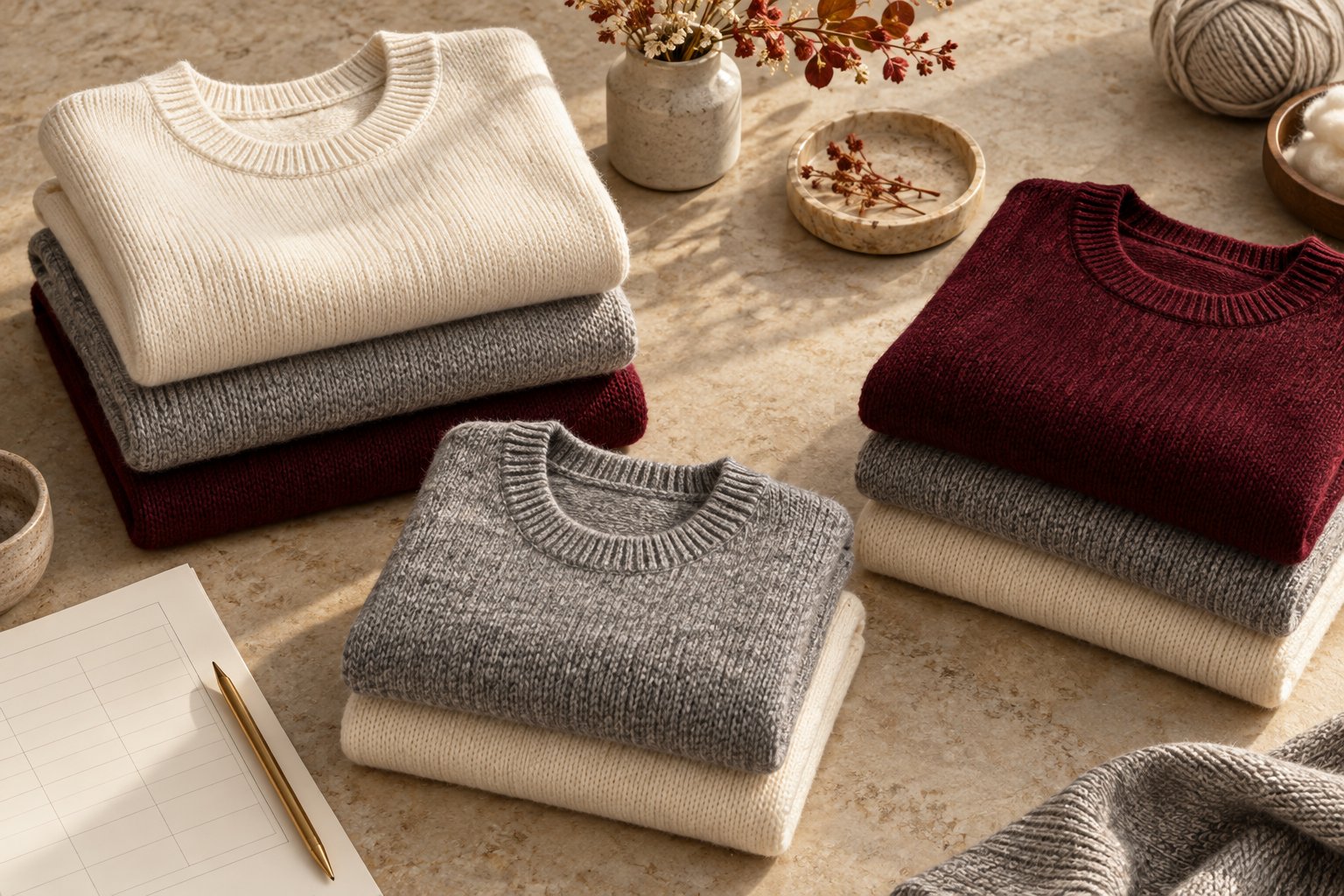
Show the size distribution
List the requested sizes and the quantity for each. Check that the size quantities add up to the style-colour subtotal and that all subtotals match the order total.
If the size distribution is provisional, label it accordingly. The team should know which quantities can be used for initial discussion and which have been confirmed for the order.
Confirm sets and packing counts
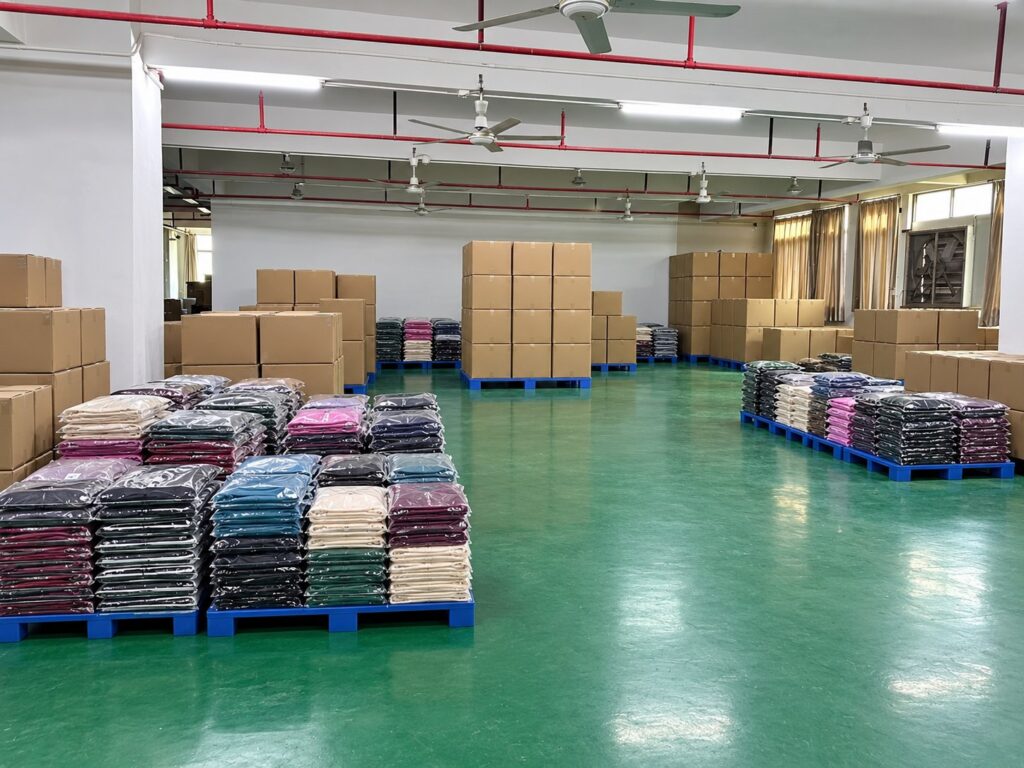
Connect the order breakdown with presentation requirements. Specify whether sizes are mixed or separated in packing and how matching pieces are identified.
Before approval, reconcile the quotation, order sheet and packing brief. A clear numerical handover is more useful than repeating the total in several places with slightly different assumptions.
Before you send the brief
- Counting unit and style codes
- Quantity for every style-colour combination
- Size distribution and checked totals
- Set composition and packing assortment
Bring the details. Let’s review the next step.
Share your garment reference and highlight the decisions you want to discuss.
Discuss Your Project ↗WhatsApp ↗Images are illustrative. AI-generated photographs, edited process scenes and explanatory visuals are not verified records of a particular factory, customer order, approved specification or test result. Confirm product details with the development team.