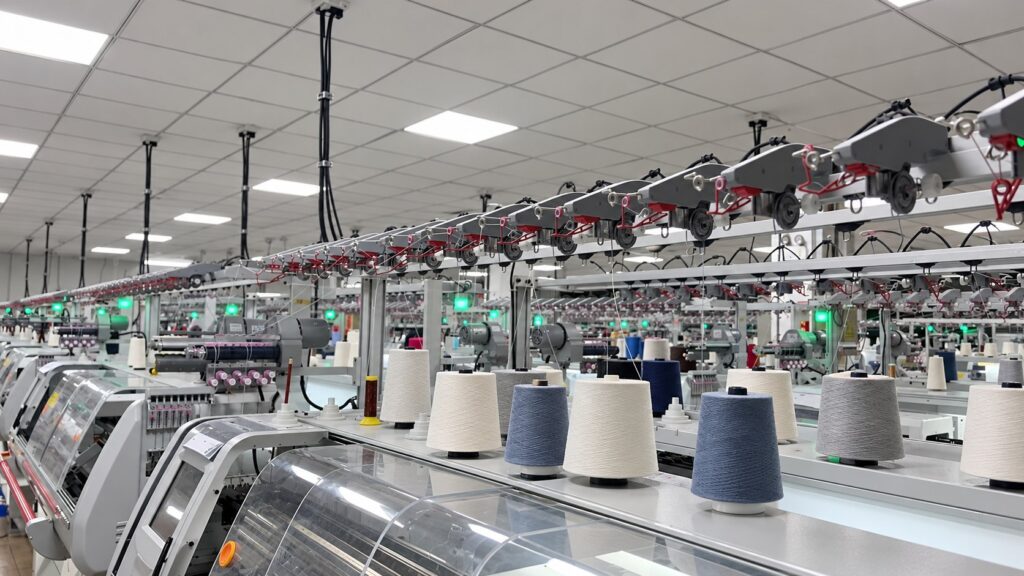
What the gauge number does and does not tell you
Machine gauge describes a characteristic of the knitting equipment. It does not, on its own, tell a buyer exactly how heavy, open, soft or substantial the finished garment will be. Treat it as one input rather than a quality grade.
If your brief starts with a gauge preference, add a reference garment or swatch. Explain the surface and silhouette you want instead of asking the sampling team to infer them from a number.
Compare like-for-like samples
Compare samples under similar conditions. If yarn, stitch, colour and finishing all change at once, it becomes difficult to identify which change produced the result you prefer.
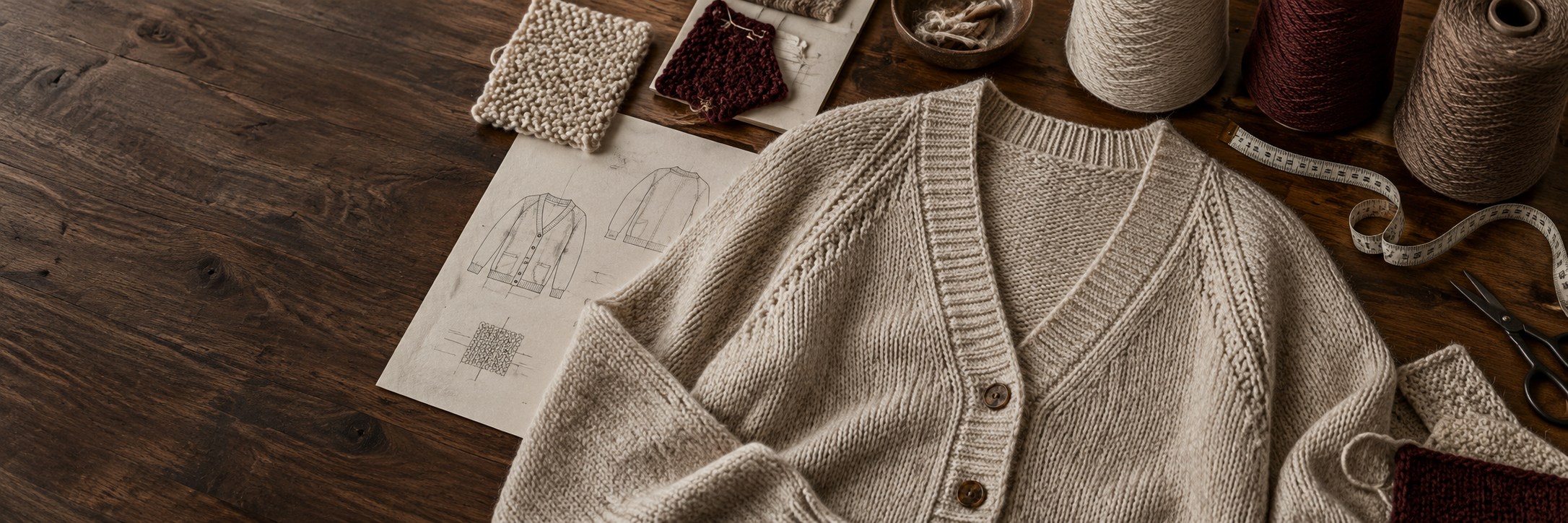
Ask for the proposed construction to be recorded alongside the swatch. A photograph can help explain the visual difference, but handling the sample remains important when assessing body and drape.
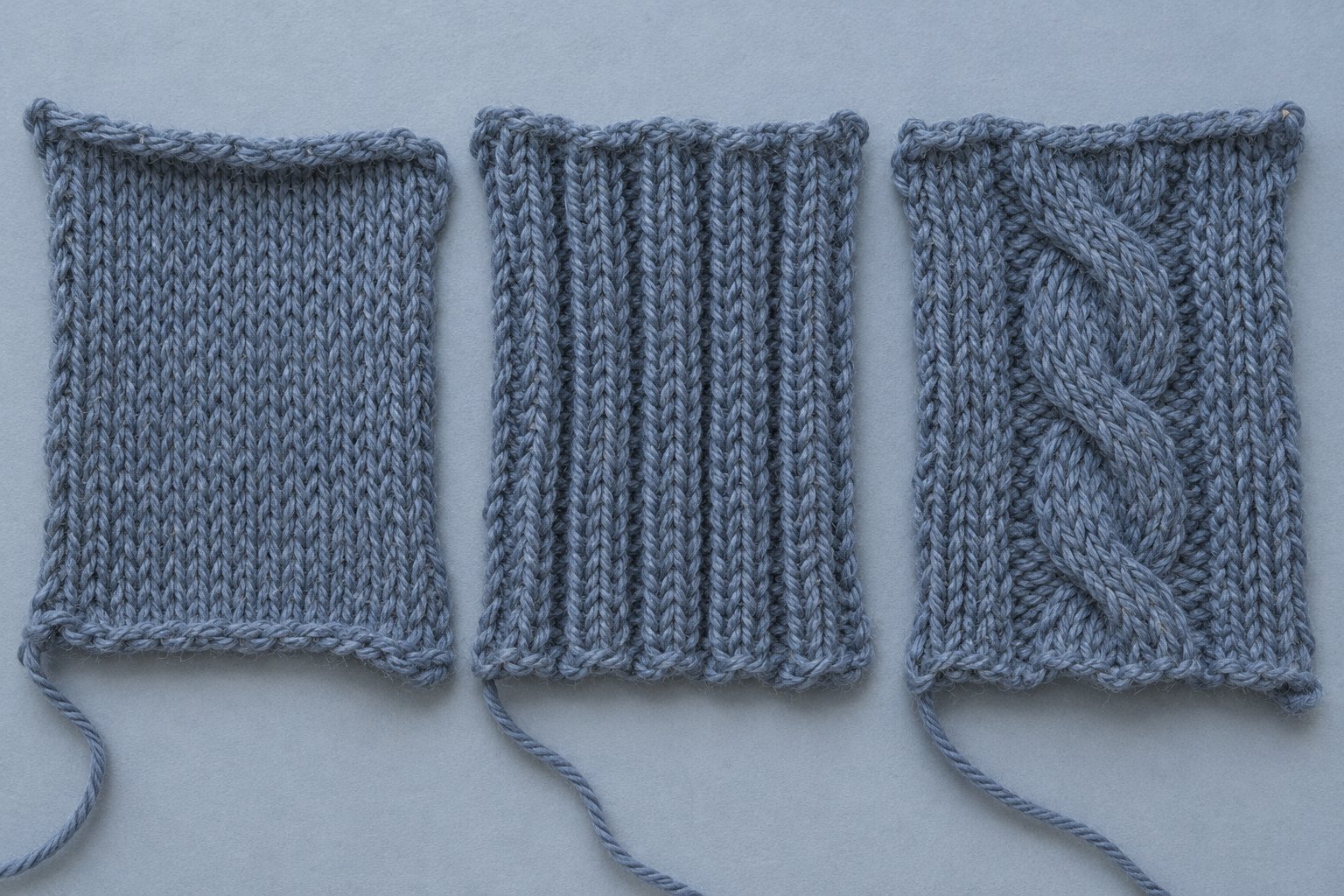
Connect structure with silhouette
A small square may suggest a texture, but the complete garment introduces weight, seams, collars and rib edges. Review whether the proposed fabric supports the intended length and fit.
For example, approving a main-body swatch does not automatically approve the width or tension of a cardigan placket. Keep those garment details visible in the sample review.
Approve a complete specification
Record the selected yarn reference, proposed gauge, structure, colour and finish with the approved sample version. Avoid changing one item while leaving the rest of the specification ambiguous.
If the reference is a purchased garment with unknown construction, describe it as a target for review. The development team should confirm a workable proposal rather than promise an exact match from a photograph.
Before you send the brief
- Gauge proposal plus physical reference
- Yarn and stitch recorded together
- Garment-level review of drape and edges
- One identified construction and sample version
Bring the details. Let’s review the next step.
Share your garment reference and highlight the decisions you want to discuss.
Discuss Your Project ↗WhatsApp ↗Images are illustrative. AI-generated photographs, edited process scenes and explanatory visuals are not verified records of a particular factory, customer order, approved specification or test result. Confirm product details with the development team.